
Talk to the 4Sight team about how Project Utility Engineering can help support your next project

Despite being one of the least visible aspects of project delivery, utilities can be the most influential. When they aren’t fully understood, their impact can extend well beyond the utility itself.
Project Utility Engineering brings utility considerations to the forefront, helping project teams navigate crucial decisions earlier on. This creates a clearer understanding of potential risks and builds greater confidence.
Understanding the Terminology
Project Utility Engineering: The discipline focused on understanding and managing utility-related risk within infrastructure projects.
Project Utility Engineer (PUE): The professional who applies Project Utility Engineering principles into project planning and decision-making.
Board-Certified Project Utility Engineer (BC.PUE): A professional certification recognizing individuals who have an advanced knowledge, experience and competency in Project Utility Engineering. The certification was developed through Civil Engineering Certification (CEC) and the Utility Engineering & Surveying Institute (UESI) under the American Society of Civil Engineers (ASCE).
Why Utility Risk Matters
Utilities can have a significant impact on an infrastructure project, especially when what exists underground doesn’t match what has been documented.
Even a seemingly minor utility issue can create uncertainty for the wider project. If discovered too late, it may require the team to rethink decisions already made, adding complexity at a point when options are more limited.
Understanding that uncertainty early creates more opportunity to address it. Project Utility Engineering provides this broader perspective, helping teams consider utility risk as part of the project rather than responding to individual conflicts as they arise.
Ready to find out more?
Why Owners Engage a Project Utility Engineer
It is increasingly recognized that utility risk is project risk. Having a Project Utility Engineer (PUE) involved early gives owners greater visibility into potential issues while there is still opportunity to address them. A PUE can help project owners:
- Identify and manage utility risks earlier
- Improve project certainty and constructability
- Strengthen coordination with utility stakeholders
- Reduce the potential for costly conflicts and schedule impacts

What Does a Project Utility Engineer Do?
Responsibilities vary according to the nature of the project and the PUE's role within it. The following six domains of knowledge were identified by the ASCE, that a BC.PUE should have to fulfil their role.
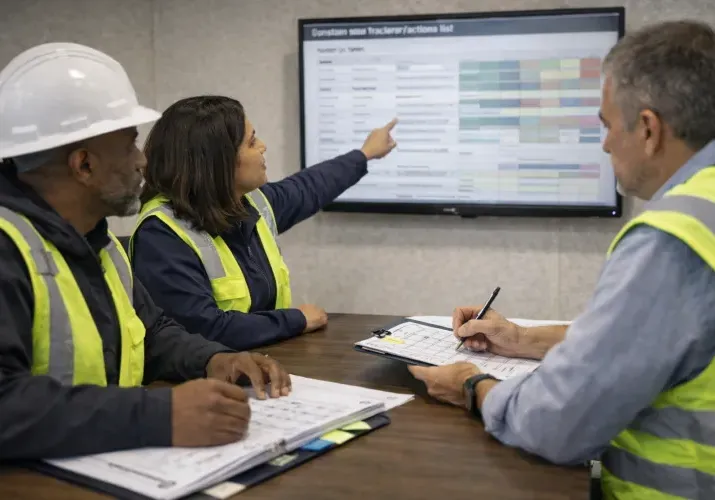
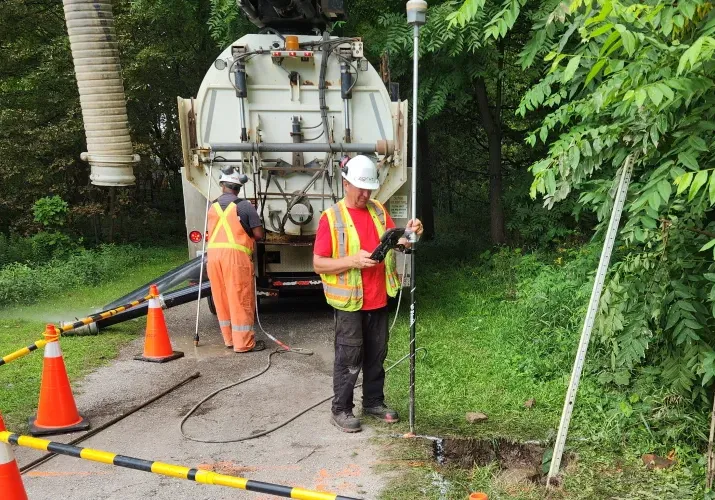

1. Utility Risk Management
Utility risk begins with knowing where uncertainty exists. A PUE considers factors such as location, condition and clearance, helping potential impacts become part of project decision-making rather than an issue discovered later.
2. Utility Investigation & Documentation
Reliable decisions depend on reliable utility information. A PUE draws on appropriate investigation and documentation methods to establish a clearer picture of existing infrastructure and how it relates to the project.
3. Utility Systems Knowledge
A PUE needs a working knowledge of the utility systems a project may encounter. This provides the technical foundation needed to understand their characteristics and potential implications for the project.
4. Utility Coordination
Successful coordination requires more than communication between stakeholders. A PUE considers the policies, rights and requirements that influence how utilities interact with the project, helping teams navigate coordination more effectively.
5. Project Utility Asset Management
Good utility information needs to remain useful throughout the project. A PUE supports effective management and exchange of that data, helping maintain reliable documentation as the project progresses.
6. Utility Construction
Knowing how utilities are constructed helps inform practical project decisions. A PUE brings an understanding of installation methods and the constraints involved in safely putting utility infrastructure into service.
Ready to find out more?
Explore the ASCE Project Utility Engineering Body of Knowledge and the practices shaping the profession.
Board-Certified Project Utility Engineer (BC.PUE) - Recognizing Advanced Utility Engineering Expertise
The Board-Certified Project Utility Engineer (BC.PUE) designation provides professional recognition for engineers who have demonstrated advanced knowledge and experience within Project Utility Engineering.
Offered through the American Society of Civil Engineers (ASCE), the certification is administered through Civil Engineering Certification (CEC) in collaboration with the Utility Engineering & Surveying Institute (UESI). It is built around the Project Utility Engineering Body of Knowledge and establishes a recognized framework for demonstrating competency within the discipline.
For owners, the designation provides an additional way to identify professionals who have demonstrated competency in this specialized area of engineering.
Interested in becoming a BC.PUE?
Learn more about the eligibility requirements and application process directly through ASCE.
Project Utility Engineering at 4Sight
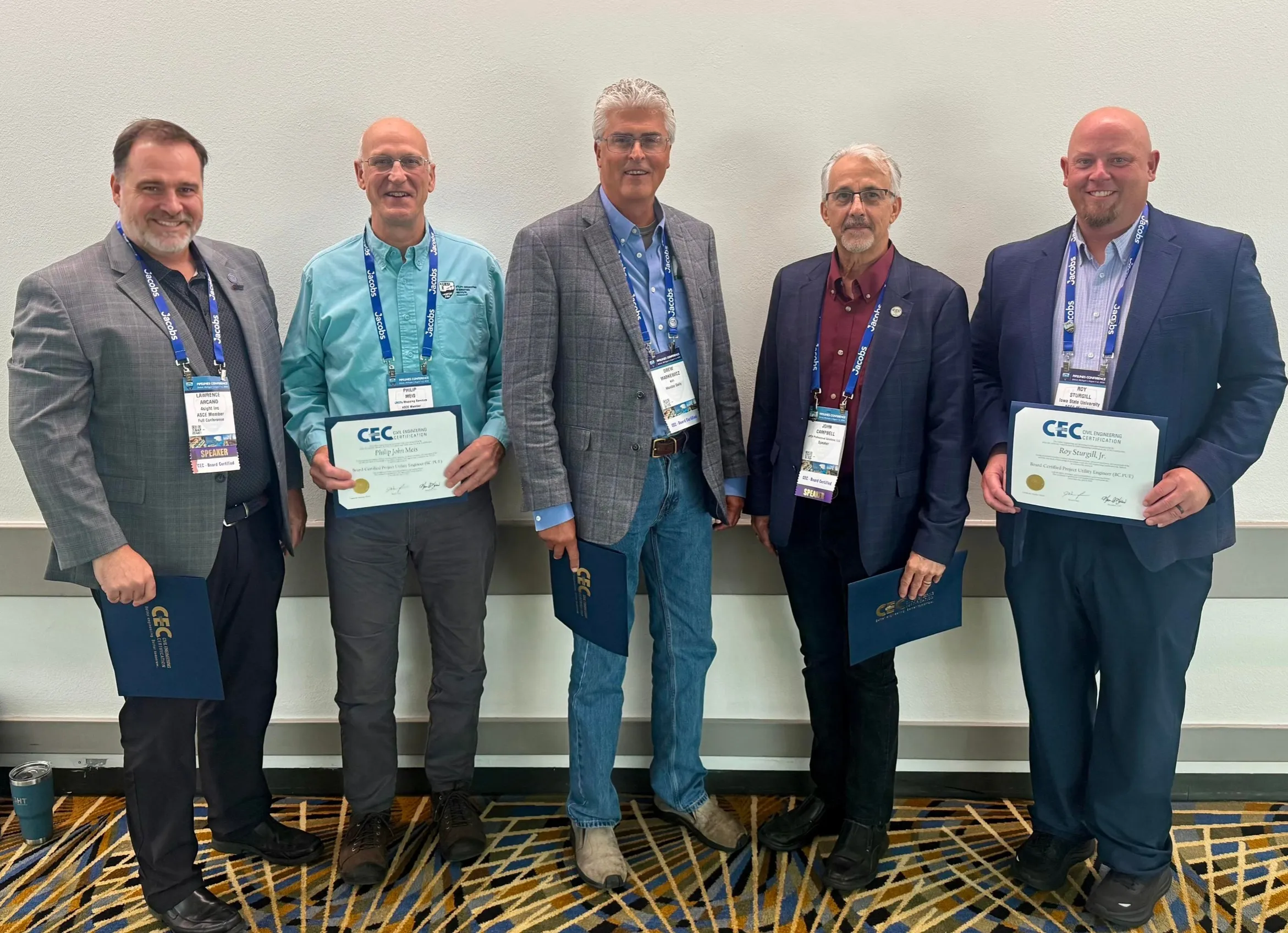
4Sight’s connection to Project Utility Engineering goes beyond the work we deliver. 4Sight Founder and President Lawrence Arcand helped lead the development of the BC.PUE credential, contributing his experience to the advancement and recognition of Project Utility Engineering as a specialized discipline.
Today, Lawrence and Claire Lukka, 4Sight’s Director of Utility Coordination, both hold the BC.PUE designation and are among the first professionals to achieve the certification.
Their involvement reflects a commitment to the discipline that is embedded in how 4Sight approaches utility engineering: looking beyond individual utility issues to understand their wider project implications.
Ready to find out more?
Join the Project Utility Engineer LinkedIn group to be part of the conversation and stay informed about the latest updates.

Contact
P: 1 (289) 385-3303
E: info@4SightUE.com
Address
Headquarters
4Sight Head Office
2100 Forbes Street, Unit 1
Whitby, ON
L1N 9T3
126 Market Street
Commercial Unit #1
Philadelphia,
PA 19106
© 2026 All Rights Reserved | Contact Us | Accessibility | Privacy Policy | Terms of Use