
This article provides a high-level overview of a broader framework for managing utility coordination risk. Download the full whitepaper to explore real project scenarios, core soft skills, and proven documentation frameworks.

Soft Skills in Utility Coordination:
How To Manage Risk on
Infrastructure Projects

In utility coordination, technical competence is the baseline. It is required, but it does not determine which infrastructure projects run smoothly and which do not. The difference is how well utility coordination risk is managed across stakeholders, timelines, and uncertainty. That is where soft skills become critical.
At 4Sight Utility Engineers, communication, collaboration, and professional judgement are treated as core risk management tools in utility coordination.
Where Utility Coordination Risk Comes From
Utility coordination sits at the intersection of engineering, construction, and utility operations. Risk is inherent in that environment.
Most projects must navigate incomplete utility records, unknown subsurface conditions, competing stakeholder priorities, and fixed regulatory or construction schedules. Each factor can be managed independently. Risk escalates when they overlap without alignment.
Delays, change orders, and safety exposure rarely come from a single technical issue. They come from gaps in communication, timing, and shared understanding.
Why Technical Expertise Alone Does Not Reduce Project Risk
Even well-designed infrastructure projects experience coordination issues. Not because the engineering is wrong, but because expectations are not aligned, constraints are not communicated, and decisions are not clearly documented.
Accurate utility data and mapping do not prevent conflict if stakeholders interpret or act on them differently. Technical skills identify utility risks. Soft skills determine whether those risks are resolved.

Soft Skills as Risk Management Tools in Utility Coordination
When applied deliberately, soft skills function as practical risk controls that directly impact project outcomes.
Clear communication surfaces utility conflicts early and creates time to act. Active listening reveals constraints that do not exist in drawings or data. Strong relationships improve trust and information flow across municipalities, engineers, contractors, and utility owners.
At the same time, the ability to collaborate without formal authority keeps projects moving, while conflict resolution maintains progress without damaging working relationships.
Together, these skills reduce schedule risk, cost exposure, and disputes across infrastructure projects.
Download the Utility Coordination Whitepaper
Documentation: The Backbone of Risk Reduction
Documentation is one of the most underused tools in utility coordination.
Strong documentation maintains continuity across phases, captures decisions and rationale, and prevents disputes when conditions change. It protects all stakeholders by creating a clear record of what was known, decided, and communicated.
Meeting minutes, conflict matrices, and decision logs are not administrative work. They are essential risk controls in utility coordination.
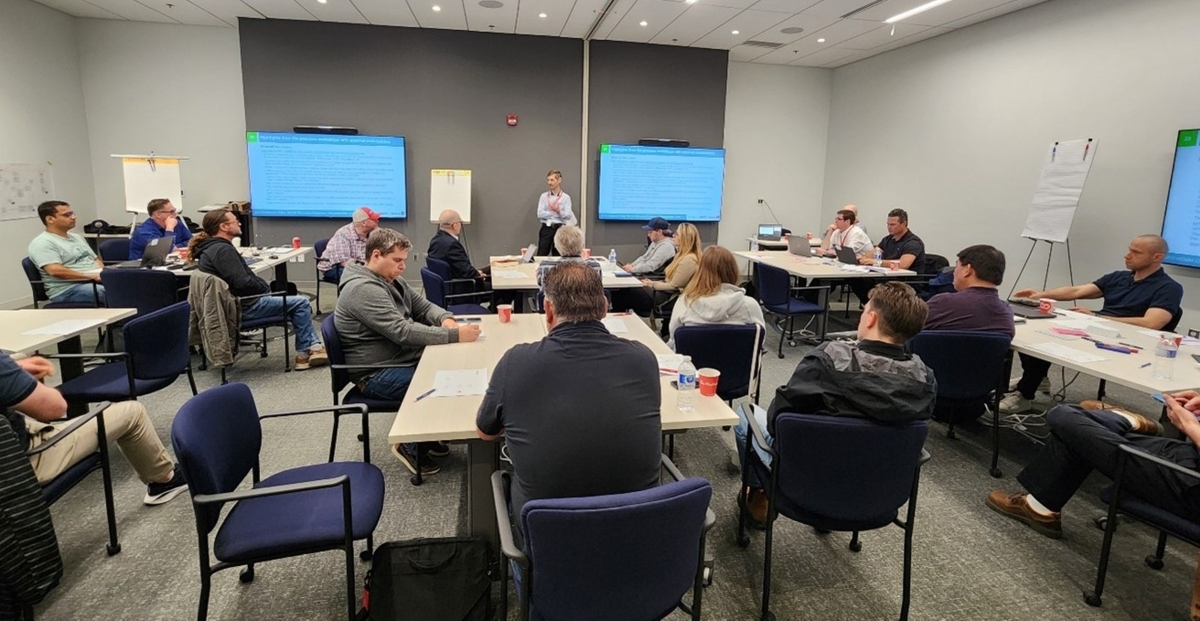
How Effective Coordination Improves Infrastructure Project Outcomes
Weak coordination leads to predictable outcomes. Misalignment drives delays, conflicts are identified too late, and cost and safety risks increase.
Strong coordination changes that dynamic. Issues are identified earlier, decisions happen faster, and stakeholders remain aligned. The result is reduced overall project risk and more reliable delivery.
Better communication leads directly to better infrastructure outcomes.
The Role of the Utility Coordinator
Utility coordinators operate without formal authority but carry significant responsibility in managing utility coordination risk.
Their role is to bridge technical and organizational gaps, align competing priorities, and guide communication across disciplines. This is leadership through influence, and it is one of the most important drivers of risk reduction on complex infrastructure projects.
Practical Ways to Improve Utility Coordination
Most coordination challenges can be traced to one root cause: critical information was not communicated early enough.
Progress does not require a full overhaul. It starts with communicating earlier, clarifying key assumptions, strengthening relationships, and improving documentation habits. These small changes compound to reduce risk across every project phase.
Ready to find out more?
Download the Utility Coordination Soft Skills whitepaper. If you want to see how effective utility coordination can improve your next project, contact 4Sight.

| Related News |
|---|








Contact
P: 1 (289) 385-3303
E: info@4SightUE.com
Address
Headquarters
4Sight Head Office
2100 Forbes Street, Unit 1
Whitby, ON
L1N 9T3
126 Market Street
Commercial Unit #1
Philadelphia,
PA 19106
© 2026 All Rights Reserved | Contact Us | Accessibility | Privacy Policy | Terms of Use