4Sight Associates Shine at the ORCGA Locate Rodeo

Skill, precision, and teamwork—our Associates brought it all to the Locate Rodeo!

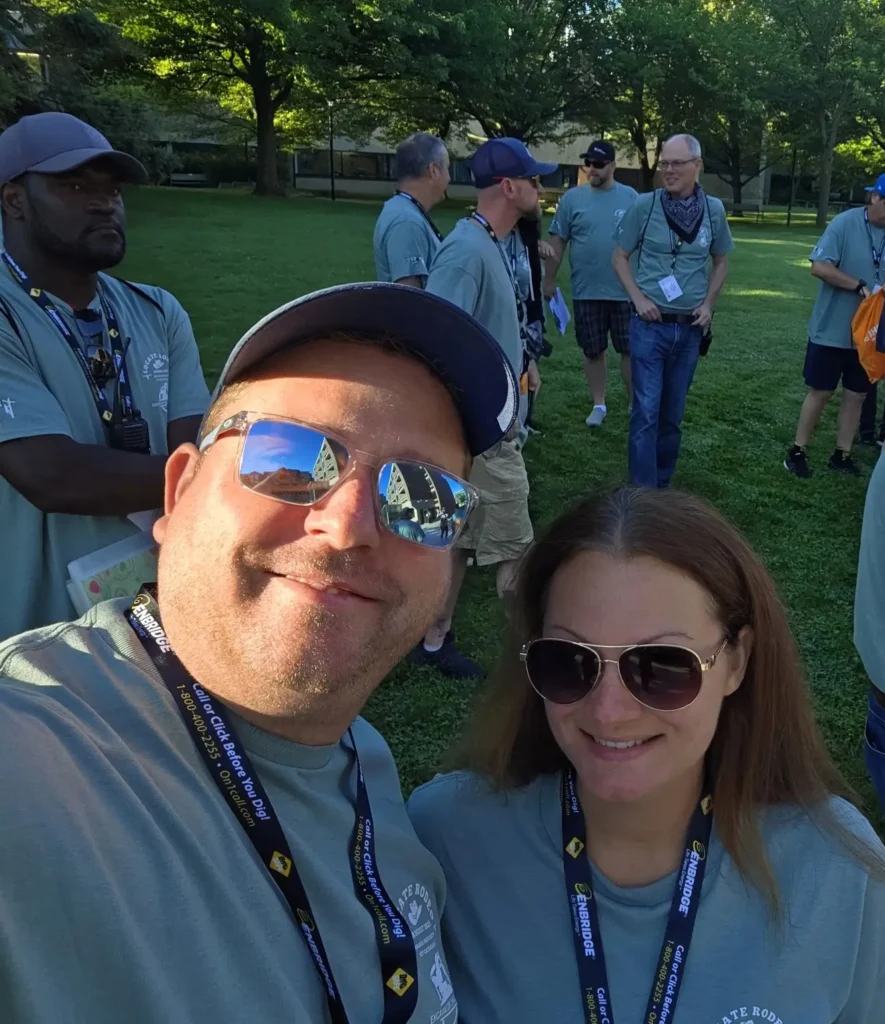
At 4Sight Utility Engineers, we are proud to recognize our Associates for the many ways they contribute to advancing our industry. One recent highlight was the ORCGA Locate Rodeo, an annual event that showcases the skill, accuracy, and professionalism of utility locators from across Ontario.

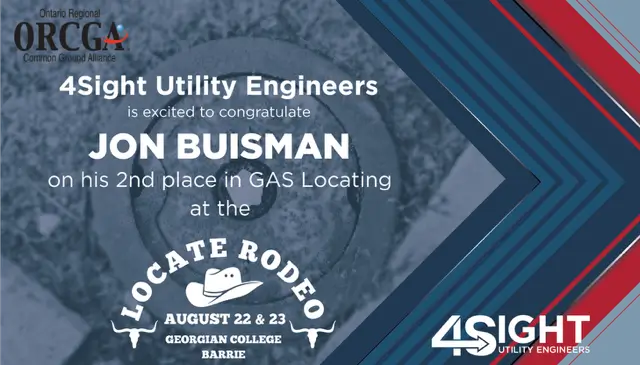
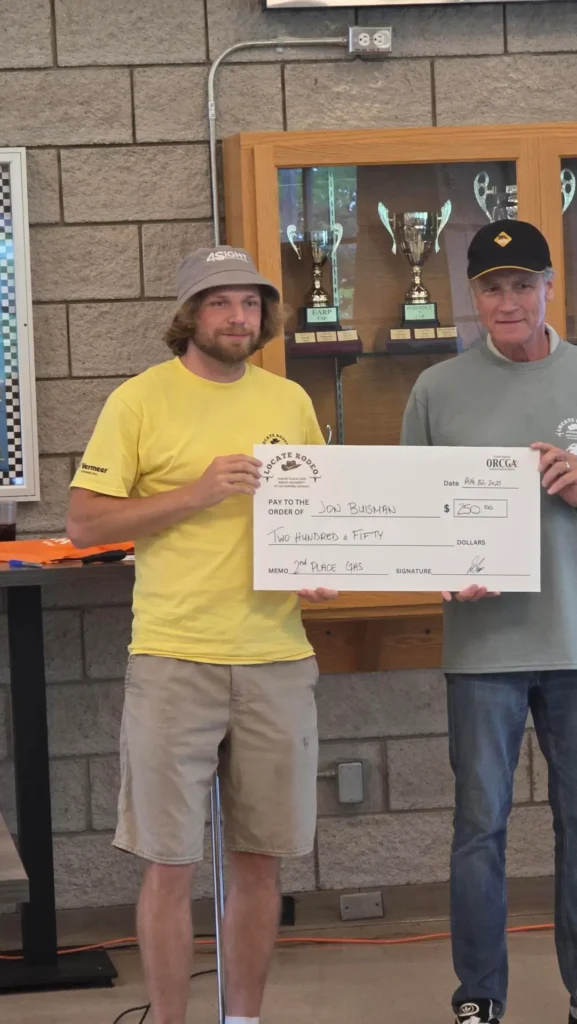
We are thrilled to share that Jon Buisman earned 2nd place in the Gas Locating category. This outstanding accomplishment speaks to Jon’s technical expertise and the precision required in Subsurface Utility Engineering (SUE).

We also applaud Ian Gillis, who competed again this year after earning 1st place in Water Locating at a previous Rodeo. Ian’s continued involvement underscores the strength and consistency of our field team.

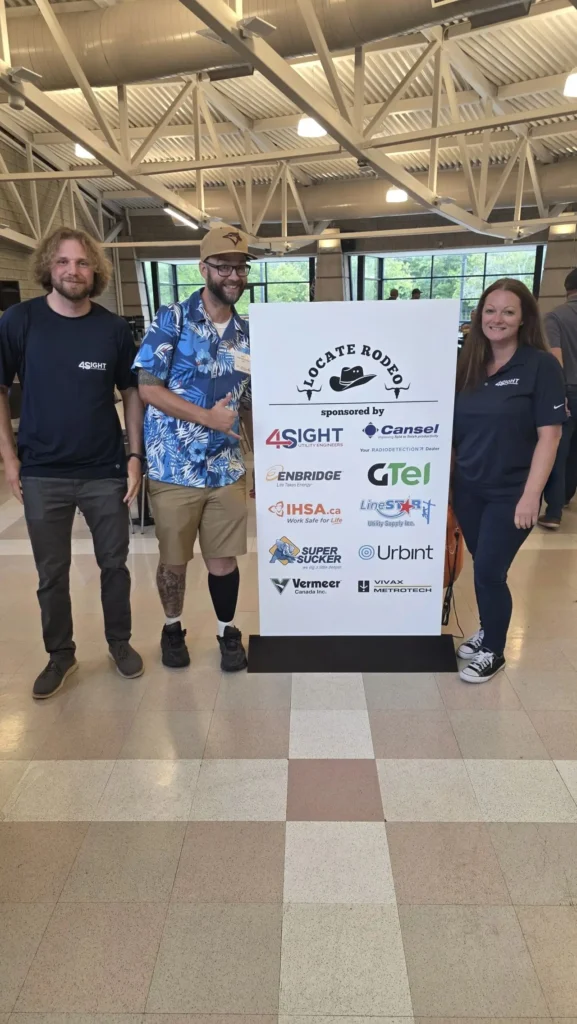
Events like the Locate Rodeo don’t just celebrate competition—they highlight the importance of safe digging practices, industry collaboration, and professional growth. We are especially grateful to our colleagues Kelly Whitmore and Scott Schreiber, who generously volunteered their time to support the event’s success.

Our Guiding Principles come to life when our team steps up at events like the Locate Rodeo.

We believe in celebrating not only project milestones but also the professional achievements of our Associates. Participating in industry events like the ORCGA Locate Rodeo reflects our commitment to Serving our Associates, Serving our Clients, and Embracing an Innovative and Entrepreneurial Spirit—the Guiding Principles that drive us forward.

Congratulations once again to Jon, Ian, Kelly, and Scott—your efforts are an excellent example of 4Sight teamwork in action.
USEI Pipelines Conference

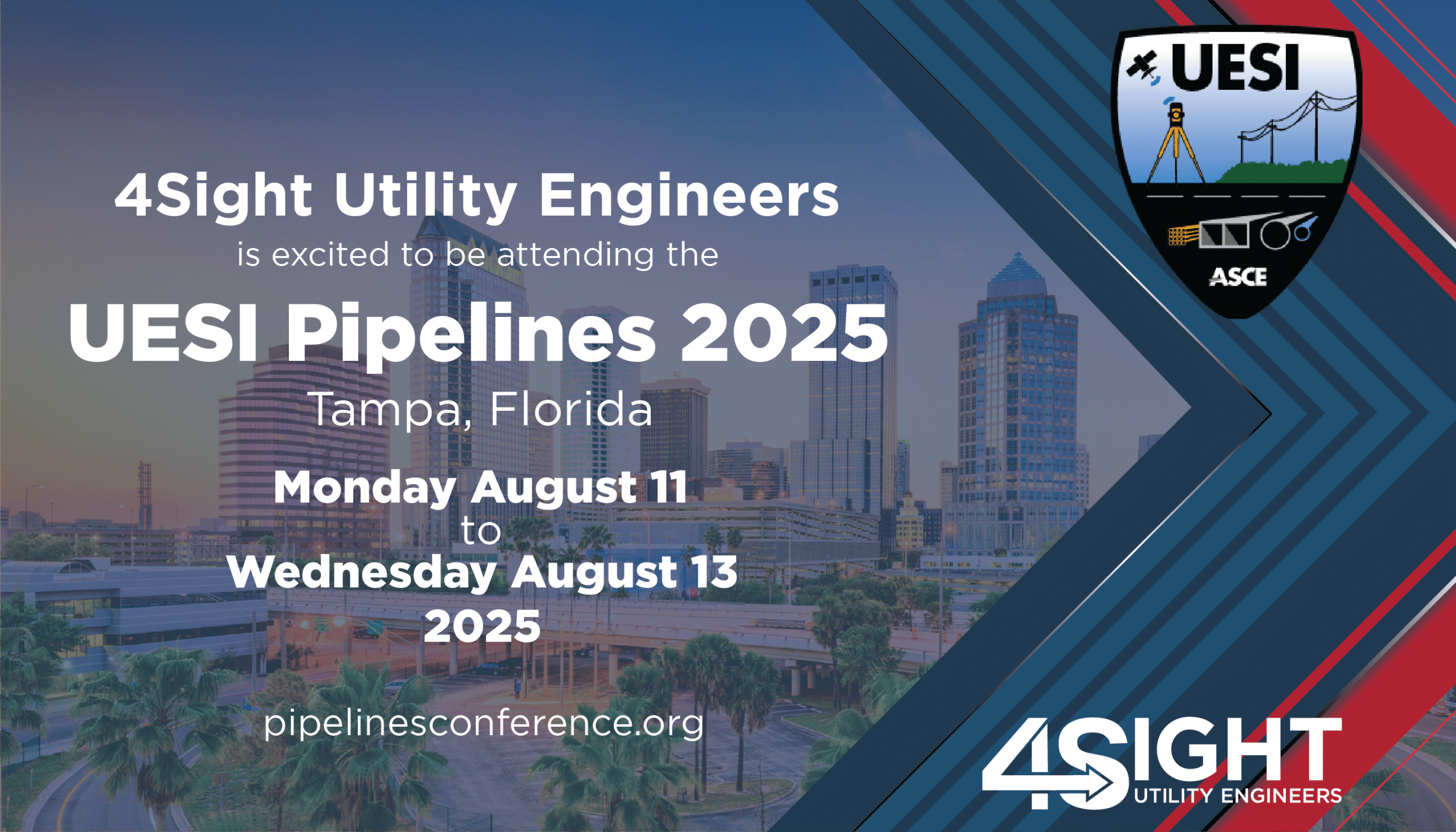
Our President, Lawrence Arcand, P.Eng , PE, will be speaking at the USEI Pipelines 2025 Conference in Tampa today, Monday, August 11th at 1:30 pm as part of a panel hosted by UESI and CEC. This session will spotlight a major milestone in utility engineering: the launch of the Board Certified Pipeline Engineer-Water (BC.PLW) certification. It will also offer a preview of what’s ahead, including the presentation by Lawrence on the upcoming Board Certified Project Utility Engineer (BC.PUE) credential and future programs currently in development.

We are proud to offer a one-time-only $1,000 scholarship each year through the 4Sight LEAP Program (Learning, Education, and Achievement Pathways)

We are proud to offer a one-time-only $1,000 scholarship each year through the 4Sight LEAP Program (Learning, Education, and Achievement Pathways), supporting the graduating high school students of our full-time team members as they begin their post-secondary journeys.

The LEAP Program recognizes every eligible high school graduate, including children, stepchildren, and other dependents for whom the employee holds a parental or guardianship role. Now in its second year, this initiative is one of the ways we celebrate the personal milestones that matter to our team — and the people who matter most to them.

This year, we are thrilled to recognize Benny Guest, son of our Executive Assistant, Rebecca Guest. Benny will be attending George Brown College in Toronto this fall to study Graphic Design.

Our inaugural LEAP recipient, Isabelle Guest, Benny’s sister, recently completed her first year in Political Science at McMaster University in Hamilton, Ontario.

We look forward to celebrating many more LEAP recipients in the years ahead.

Congratulations, Benny. We are all cheering you on!

Read more here!

We’re thrilled to announce that 4Sight Utility Engineers is a 2025 Ontario Engineering Project Award winner!

We proudly accepted this honour at the ACEC-Ontario OEPA Gala for our project: “Strategic Application of Multi-Channel GPR in Utility Coordination and Beyond.” This achievement reflects the core values we were founded on, serving our associates, supporting our clients, and leading with innovation and an entrepreneurial spirit. Watch the Gala video here: SMALL FIRM BIG IMPACT – 4SIGHT UTILITY ENGINEERS – STRATEGIC APPLICATION OF MCGPR TECHNOLOGY on Vimeo

Delivered in collaboration with Jacobs and the City of Mississauga, this project showcases how smart technology and bold thinking, through multi-channel ground penetrating radar (MCGPR), can generate deeper insights, greater value, and measurable impact.  We’re proud to help raise the bar for Utility Engineering in Canada and even prouder of the incredible team who made it all possible!

#4Sight #OEPA2025 #ACECOntario #UtilityEngineering #SubsurfaceUtilityEngineering #SUE #Geophysics #MCGPR #EngineeringExcellence #AwardWinningTeam #4SightUtilityEngineers #UtilityCoordination

4Sight NEWS

We are excited to announce the launch of our new and improved website.  It corresponds very closely to opening of our new office.  We hope that you have fun exploring our new website.  If you do see any issues that fell through the cracks please reach out to us to let us know.  You can e-mail info@4Sightue.com.  ENJOY

POST 78 – History of Colorado Senate Bill 18-167

CONCLUSION

The Serendipitous History of Colorado’s Senate Bill 18-167

Part 4 by James H. Anspach

One of the key players in any legislative effort is the Office of the Governor and its priorities. Governor Hickenlooper, a geologist and businessman, was concerned over explosions due to damaged natural gas lines during construction. A recent incident called the Firestone Explosion killed several innocent bystanders, and so utility construction safety was on his mind. He had several meetings to see what could be done, and GENERALLY was in support of Sen. Scott’s initiative. As the noise of utility initiatives continued to grow, Jim Anspach was able to gather Gov. Hickenlooper’s ear regarding ASCE 38, issues with Sen. Scott’s solution, and in general received support from the Governor.

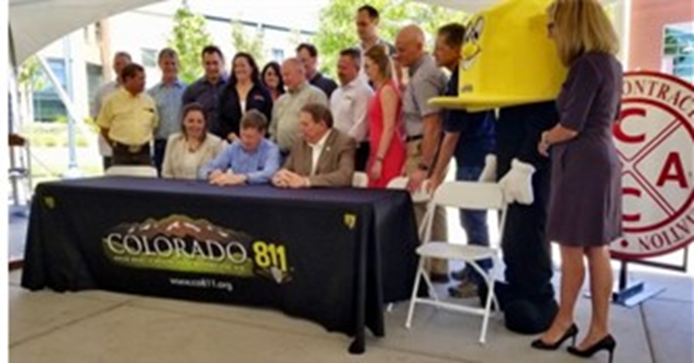
While all of these different stakeholders were being courted, Sen. Ray Scott continued on with his campaign to get his revised legislation to a vote. Eventually, the bill passed both chambers and was signed into act by Gov Hickenlooper on May 25, 2018, and became enforceable on August 8, 2018.

IN GENERAL TERMS, THE COLORADO LEGISLATION SAYS THAT ANY PUBLIC PROJECT OF SIZE THAT INCLUDES EXCAVATION OR BORING, MUST TRY TO ACHIEVE QLB ON ANY AND ALL UTILITIES WITHIN THE PROJECT LIMITS, UNLESS AN ENGINEER DECIDES IT IS UNNECESSARY.

The Colorado Attorney General’s office subsequently ruled that SUE plans and reports must be signed and sealed by a Professional Engineer (PE). CDOT took the position that any project, including utility accommodation projects in their rights-of way that required permits, fell under this legislation.

Many people contributed to the success of this effort, and it really was not part of any master plan on anyone’s part. It really was knowing and getting all the right people to the table at the same relative time period with a solution that worked for everyone. It could, and should, work in every state to protect the public health, safety, and welfare of issues surrounding existing buried utilities.

THANK YOU, JIM ANSPACH, FOR PREPARING THIS PRESENTATION AND FOR ALLOWING ME TO POST IT.

More information about Colorado’s Senate Bill 18-167 and a copy of the bill itself can be found at https://leg.colorado.gov/bills/sb18-167.

A PowerPoint presentation by Andrew Sylvest (Utility Engineering Operations Manager, SAM Family of Companies) contains more information about the workings and implementation of Colorado’s Senate Bill 18-167 and can be found at Q7_2_SB-18-167-Presentation (steamboatsprings.net).

HISTORY OF SUBSURFACE UTILITY ENGINEERING

POST 79 – MUTCD

The USDOT’s Manual on Uniform Traffic Control Devices (MUTCD) is an important part of Subsurface Utility Engineering (SUE). 

Many of SUE’s designating and locating activities involve work on or near streets and highways. Motorists often do not expect these intrusions and therefore should be informed well in advance of what is going on. Nationally mandated information for doing this is contained in Part 6 of the MUTCD, which addresses temporary traffic control (TTC). TTC involves the use of signs, markings, and other devices used to regulate, warn, or guide users of roadway facilities.

 The MUTCD is published by the Federal Highway Administration (FHWA) and contains national standards for all traffic control devices, including highway signs, markings, and other devices. It is updated periodically to accommodate the nation’s changing transportation needs and to address new safety technologies, traffic control tools, and traffic management techniques.

 On December 19, 2023, a Final Rule adopted the 11th Edition of the MUTCD and was published in the Federal Register with an effective date of January 18, 2024. States were required to adopt the 11th Edition of the National MUTCD as their legal State standard for traffic control devices within two years from the effective date. The Federal Register notice, which provides detailed discussion of the final dispositions of major changes from the 2009 edition, can be viewed at https://www.federalregister.gov/d/2023-27178.

FHWA does not print paper copies of the MUTCD. It is available, however, as a free PDF document at 11th Edition of the MUTCD.

More next week about applicability of the MUTCD to SUE.

HISTORY OF SUBSURFACE UTILITY ENGINEERING

POST 80 – SANDY WILSON

Sandy Wilson just completed her 28th consecutive year working for the T2 Utility Engineers where she is a Project Manager for the Illinois Office. I can only think of a few people that have been with their present companies doing SUE work for that length of time. The history of SUE in Illinois and Sandy’s history coincide and continues to this day. I find that pretty amazing. I asked Sandy to tell us a little bit about it and the following is what she had to say:

“I started my career with Tampa Bay Engineering back in 1996 in Bloomington, Illinois. During this time, our company had started to grow outside the state of Florida, and we had changed our name to TBE Group, Inc. The Illinois office at the time was providing OSP (Telephony Signal Source Provider Contract) Outside Plant System Design Services for GTE North for new fiber optic installations throughout Illinois and Wisconsin. When GTE North was purchased by Verizon in 1998/1999, all contracts with GTE soon ended. Verizon decided to keep all design services in house. I was given the opportunity by TBE to remain with the company to begin learning about Subsurface Utility Engineering.

My work started on various SUE assignments out of our Indianapolis office for a short period of time. TBE was awarded a SUE contract with the Illinois Department of Transportation for IDOT District 1, and we soon opened our new Illinois branch office performing SUE services in the Northwest Suburbs of Chicago in 2001. I was not the original manager when we opened our office in Bloomington, Illinois. I was the administrative technical support assistant to the OSP Engineers who taught me how to interpret telephone and fiber optic as-built records that were drawn by hand before CADD software became available.

After my time in Indiana learning the SUE process and procedures, my job description had changed to Assistant Utility Coordinator and then I was promoted to Assistant Project Manager. Over the years, I trained with several managers who currently work for T2 and along with other managers prior who no longer work for us, that helped me be successful in my current position. Over the years, we had developed relationships with clients by educating their project team on the benefits of SUE Services.

Today, we continue to perform SUE Services for the Illinois Department of Transportation Districts 1 and 8 and other various clients throughout Illinois. We do take the time to listen and tailor each project based on the client’s needs to give them a quality SUE deliverable and complete their projects efficiently and with reduced risks.”

Thank you, Sandy. You are pretty amazing. 

Is there anyone else in the SUE community with a similar history? If so, please send me an email at cpscott532@aol.com and let me know.  Thanks!

#SuburfaceUtilityEngineering

HISTORY OF SUBSURFACE UTILITY ENGINEERING

POST 81 – MOVING ON 

I hope you enjoyed last week’s LinkedIn Post featuring Sandy Wilson. She and others like her have contributed significantly to the growth of SUE.

As many of you know, managing a SUE office has many responsibilities, including (a) identifying and introducing SUE to potential users, (b) meeting with existing clients to assure they are getting what they think they are getting, (c) managing, hiring, and training staff, (d) assuring the SUE work is being done in accordance with ASCE 38-22, and (e) much, much more. I believe we would all agree, a job well done enhances the SUE profession, and vice versa. Overall, looking at the astronomical growth of SUE around the world, there must be a lot of very good work going on.

Pausing for a few minutes to think about the history of Subsurface Utility Engineering, I feel like the major effort in the later part of the 20th Century involved introducing SUE to potential users. Moving into the 21st Century, the focus seems to have moved toward establishing standards, testing new equipment (see T2 early MCGPR picture), performing research, and introducing SUE to other potential clients, not only in the United States, but also in other countries.

Continuing with this thinking, the history of SUE will continue for the remainder of the year and maybe beyond by looking at some of the following:

SUE Research —

> University of Toronto SUE Study

> Penn State’s Subsurface Utility Engineering Manual

> TRB’s SHRP2Program

> UK’s Mapping the Underworld

> TRB’s SHRP2

SUE in Other Countries —

> UK,

> Australia,

> China,

> France

(We have already looked at SUE activities in Canada and Ecuador)

New Equipment –

> Multi-Channel Ground Penetrating Radar (MCGPR)

> Other New Equipment

New Organizations –

> Utility Engineering & Surveying Institute (UESI)

> SUE Association

Videos –

> FHWA’s CCC, Making the Effort Works,

FAA’s Subsurface Utility Engineering Information Management for Airports

Documents –

> APWA SUE Handbook

> ASCE’s SUE, Engineering for Municipalities

> Others

Conferences –

> TRB

> NHUC

> AASHTO CRUO

> UESI Pipeline

> SUE Association

> Others

Standards –

> ASCE 38-22, Standard Guideline for Investigating and Documenting Existing Utilities

> ASCE 75-22, Standard Guideline for Recording and Exchanging Utility Infrastructure Data

 Pioneer Profiles – To Be Determined

WHAT HAVE I MISSED?  PLEASE LET ME KNOW!

HISTORY OF SUBSURFACE UTILITY ENGINEERING

Post-82 – University Value Studies

By the end of the 20th Century there were LOTS of case studies showing the value of Subsurface Utility Engineering (SUE) on individual highway projects around the country. So, it was nice early in the 2000s to get three large-scale studies by civil engineering departments at major universities that looked at a variety of factors where the proper use of SUE played a role in cost and time savings.

Purdue University

In a 2000 study, researchers from the Purdue University Department of Building Construction Management evaluated the quantifiable cost savings of SUE on 71 highway projects in three states and came up with a total savings of $4.62 for every $1.00 spent on SUE. The major savings came primarily from the elimination of unnecessary utility relocations and secondarily from a reduction in delay claims.

University of Toronto

In a 2005 study, researchers at the University of Toronto conducted a study commissioned by the Ontario Sewer & Watermain Contractors Association and investigated the mapping of SUE on nine large infrastructure piping projects in urban areas of Ontario. These projects generally had values greater than $500,000 each, were located in urban areas, and had a large number of buried utilities. The average return-on-investment for SUE, for these particular projects, was approximately $3.41 for each $1 spent. The greatest savings came primarily from reduced delay claims and secondarily from the avoidance of utility relocations.

Pennsylvania State University

In a 2007 study, the Pennsylvania Transportation Institute of the Pennsylvania State University (PSU) conducted an in-depth benefit-cost analysis of 10 SUE projects located in Penn DOT Districts. The study calculated that an average of $22.21 was saved for every $1.00 spent on SUE. When the overall costs of the projects were taken into consideration, the money spent on SUE was minor when compared to the cost savings of avoiding unexpected utility conflicts and unnecessary utility relocations. The Penn State research projected that, in comparison with projects not utilizing SUE, the total cost savings of SUE projects might range from 10% to 15% on a typical project, and that ASCE-38 quality levels A and B should be used on projects based upon the complexity of the buried utilities at the construction site to minimize risks and obtain maximum benefits.

Conclusions

In the 1990s it was hard for me to understand why highway designers would choose to design a project and excavators would choose to dig without knowing in advance what utilities or other objects might be lurking under the ground. It is even harder to understand today with so much more known about the value of SUE than there was then. Even so, many apparently still prefer to save a few dollars and hope they don’t hit anything and have to pay a lot more later.