pauls-corner-early-adoption-of-subsurface-utility-engineering

Subsurface Utility Engineering (SUE) did not gain recognition through theory alone. Its early acceptance came from demonstration on active projects where inaccurate utility information had already created risk. In the early 1980s, several important events took place that began to show that a disciplined approach to underground utility investigation could change how infrastructure projects were planned and delivered. These early efforts moved SUE from a developing idea into a service that public agencies could evaluate, adopt, and rely on.

Early Contracts That Established a New Service Model

Following early project success, public agencies began to formalize how utility investigation services were procured.

In 1982, the County of Fairfax, Virginia, entered into a contract with So-Deep for locating (test holes). This was the first instance of a governmental body entering into a task-order basis contract for locating utilities. The County of Arlington, Virginia, soon followed. In 1983, as discussed previously, the Virginia Department of Transportation (VDOT) entered into a contract for designating (geophysical methods) and locating (test holes) utilities on a highway project, and in 1985, VDOT initiated a statewide contract with So-Deep for designating and locating work, the first such contract in the nation.

It was found early on that the utility companies had very poor records on the locations of their subsurface facilities and consequently the one-call markings were often inaccurate or missing.  Jim Anspach was quoted at the time as saying:

“We were determined to get good utility information in spite of not having utility records that were accurate and reliable; we repurposed geophysical technology, searched the world for new equipment, and replaced ‘pipe witching’ with science and limited utility exposure.”


The First Major Case Study That Demonstrated Measurable Value

Jim Anspach documented a case study in his history of SUE that was probably the first BIG case study showing the value of SUE. It goes like this:

Garon Stutzman approached the Virginia Department of Transportation (VDOT) in late 1983 with the concept of designating all the utilities on a highway project in the design stage so that designers could avoid them on paper when possible. VDOT saw the potential and allocated $10,000 for a trial project. The selected project was a massive road reconstruction in Crystal City (VA) traversing the Pentagon and National Airport areas. Construction plans were already drawn, with utilities plotted from owner records and supposedly “certified” as correct by the utility companies. So-Deep designated the utilities and a VDOT crew surveyed the designations and plotted them on the plans. There were vast differences. So-Deep then performed approximately 100 test holes to prove their designations were accurate and to further identify the potential conflicts. On the record, VDOT stated to the Federal Highway Administration (FHWA) that over $1 million dollars in savings to the tax payer were realized. Off the record, the figure was $7 million or more.

Post 4 - Early Subsurface Utiltiy Engineer Technician

This project established a clear outcome: investing in accurate utility information before construction could prevent cost escalation and schedule disruption.

Defining Designating and Locating as Separate Functions

At some point, questions arose regarding what to call the services that So-Deep was providing. Jim Anspach and Jeff Oakley, a Penn State physics graduate, did some brainstorming and developed the terms “designating” and “locating” to more accurately differentiate these functions. They rationalized that a utility was not located until it was exposed; until then, their existence and approximate location were designated by interpreting an energy field of some kind.

Building Quality Through In-House Survey Control

Locating 1980

As demand grew, maintaining consistency in deliverables became increasingly important. Accurate field data needed to be translated into reliable drawings that designers could use with confidence.

At the request of VDOT, So-Deep hired an experienced land surveyor (Mike Fisher) to develop its own survey capability and to manage the first VDOT contract.  Whereas many future providers subcontracted the survey work to local companies, having its own in-house survey unit provided So-Deep with better control over the quality of the work and was a differentiator in later years when competing with other providers.

The Shift Toward Recognized Professional Practice

Maryland’s Washington Suburban Sanitary Commission (WSSC) entered into a contract with So-Deep in the mid-1980s to provide designating and locating services. Maryland statutes dictated that any information depicted on plans through survey work associated with these services, when used by a public agency, must be “sealed” by a registered professional. As a result, So-Deep added a professional engineer (Lou Ostendorff) to seal their deliverables to clients. This was the first time any portion of the designating and/or locating work was required to be endorsed by a registered professional. This requirement set the stage for future development of SUE as a professional service rather than a contractor service.

Professional Liability and the Recognition of Risk

As SUE projects increased in scale, the associated risks extended beyond physical damage during construction. Securing professional liability insurance for this work proved difficult. Jim Anspach gave his insights to Paul:

"It was virtually impossible for So-Deep to remain self-insured when performing millions of dollars’ worth of what had been ruled professional services, and professional liability insurance proved difficult to get when one was doing what had never been done before. No insurance company was willing to take on the 'designating' aspect of SUE, just the traditional survey of the designating. So-Deep even went to Lloyds of London to make the attempt. Finally, CNA insurance stepped up and stated that if So-Deep was willing to pay for one of CNA’s executives to observe every aspect of field and office operations for a period of time (it lasted more than a month) and if So-Deep’s designating services were deemed “insurable” after that evaluation, CNA would offer professional liability insurance for the entire package of what So-Deep was offering. Thus, in 1988, CNA insurance company issued a professional liability policy to So-Deep that covered all aspects of its operation, not just the survey aspects. This was the culmination of years of effort by So-Deep’s General Counsel, Harley A.J. “Bucky” Methfessel. By having this insurance, So-Deep was able to cover negligent errors or omissions in their services that could result in project delay claims, redesign costs, extra work order claims…more than just covering the cost of repairs if a utility was damaged during construction. Years of successful operations without claims from So-Deep set the stage for other insurance companies to provide similar coverage to the newer SUE firms that in a few years would be entering the market.”


The Ongoing Impact on Infrastructure Projects

The practices introduced during this period continue to influence how infrastructure projects are delivered. Early efforts to improve utility data quality have evolved into comprehensive approaches that integrate field investigation with design and construction planning.

The emphasis on accuracy, documentation, and risk management remains central to SUE. These principles guide how project teams reduce uncertainty and avoid disruption.

Understanding how these methods developed provides context for current expectations. The systems used today are built on the lessons learned during these early projects, where each advancement addressed a specific gap in how underground utilities were managed.

Ready to find out more?

4Sight Utility Engineers supports clients with precise utility locating, advanced mapping, and structured investigation processes. Our team delivers the clarity needed to move projects forward with confidence

Posted in NPC
andrew-watson-scholarship-donation-2026

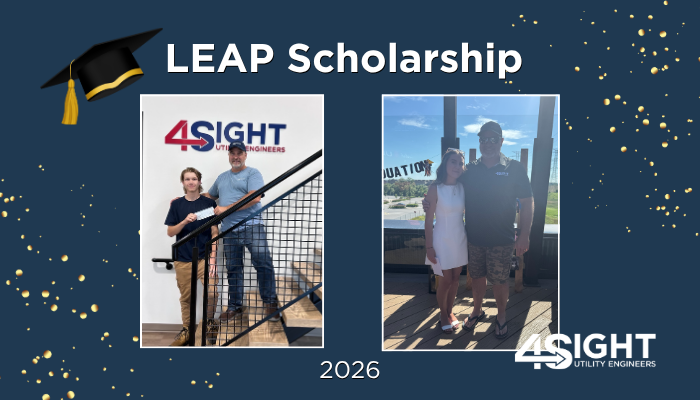
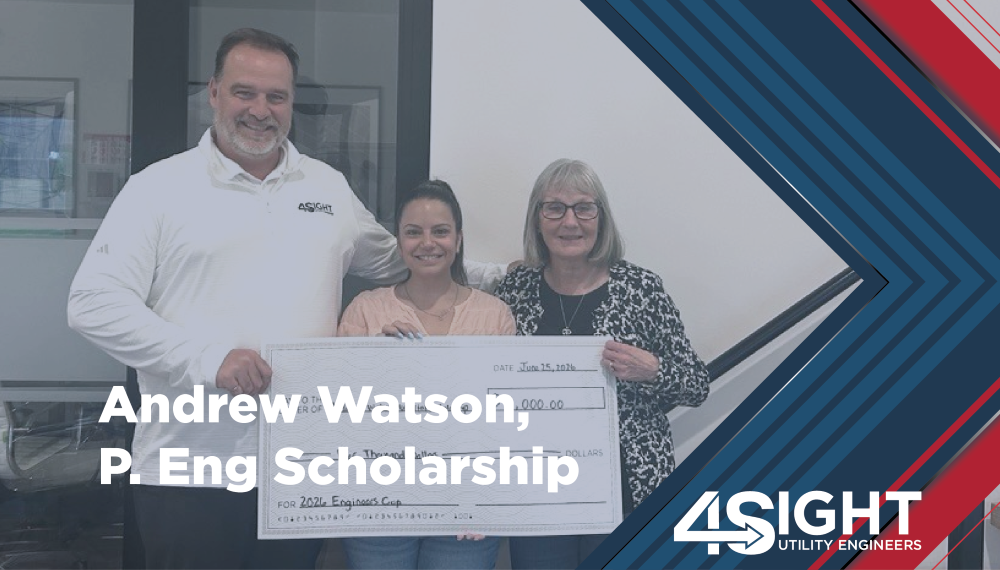
We were over the moon to be able to present $4,000 to the Andrew Watson, P. Eng Scholarship, over $1,000 more than last year! Andrews mum Angelika and cousin Renae recently visited the 4Sight office to accept the donation.
This important scholarship supports Civil Engineering students who show real determination and commitment as they work toward their goals. It honours Andrew, a highly respected engineer and TMU graduate, whose impact continues to inspire those entering the profession. Through this initiative, his legacy lives on, helping to support future engineers.
A big thank you to everyone who took part in the 2026 Engineers Cup in May and helped us raise this amazing amount. Please contact us at info@4sightue.com if you'd like to discuss taking part. We hope to see you out on the ice next year.

Soft Skills in Utility Coordination:
How To Manage Risk on
Infrastructure Projects

Utility Coordination - 4Sight 2

In utility coordination, technical competence is the baseline. It is required, but it does not determine which infrastructure projects run smoothly and which do not. The difference is how well utility coordination risk is managed across stakeholders, timelines, and uncertainty. That is where soft skills become critical.

At 4Sight Utility Engineers, communication, collaboration, and professional judgement are treated as core risk management tools in utility coordination.

Where Utility Coordination Risk Comes From

Utility coordination sits at the intersection of engineering, construction, and utility operations. Risk is inherent in that environment.

Most projects must navigate incomplete utility records, unknown subsurface conditions, competing stakeholder priorities, and fixed regulatory or construction schedules. Each factor can be managed independently. Risk escalates when they overlap without alignment.

Delays, change orders, and safety exposure rarely come from a single technical issue. They come from gaps in communication, timing, and shared understanding.

Why Technical Expertise Alone Does Not Reduce Project Risk

Even well-designed infrastructure projects experience coordination issues. Not because the engineering is wrong, but because expectations are not aligned, constraints are not communicated, and decisions are not clearly documented.

Accurate utility data and mapping do not prevent conflict if stakeholders interpret or act on them differently. Technical skills identify utility risks. Soft skills determine whether those risks are resolved.

Utility Coordination - 4Sight

Soft Skills as Risk Management Tools in Utility Coordination

When applied deliberately, soft skills function as practical risk controls that directly impact project outcomes.

Clear communication surfaces utility conflicts early and creates time to act. Active listening reveals constraints that do not exist in drawings or data. Strong relationships improve trust and information flow across municipalities, engineers, contractors, and utility owners.

At the same time, the ability to collaborate without formal authority keeps projects moving, while conflict resolution maintains progress without damaging working relationships.

Together, these skills reduce schedule risk, cost exposure, and disputes across infrastructure projects.

Download the Utility Coordination Whitepaper

This article provides a high-level overview of a broader framework for managing utility coordination risk. Download the full whitepaper to explore real project scenarios, core soft skills, and proven documentation frameworks.

Documentation: The Backbone of Risk Reduction

Documentation is one of the most underused tools in utility coordination.

Strong documentation maintains continuity across phases, captures decisions and rationale, and prevents disputes when conditions change. It protects all stakeholders by creating a clear record of what was known, decided, and communicated.

Meeting minutes, conflict matrices, and decision logs are not administrative work. They are essential risk controls in utility coordination.

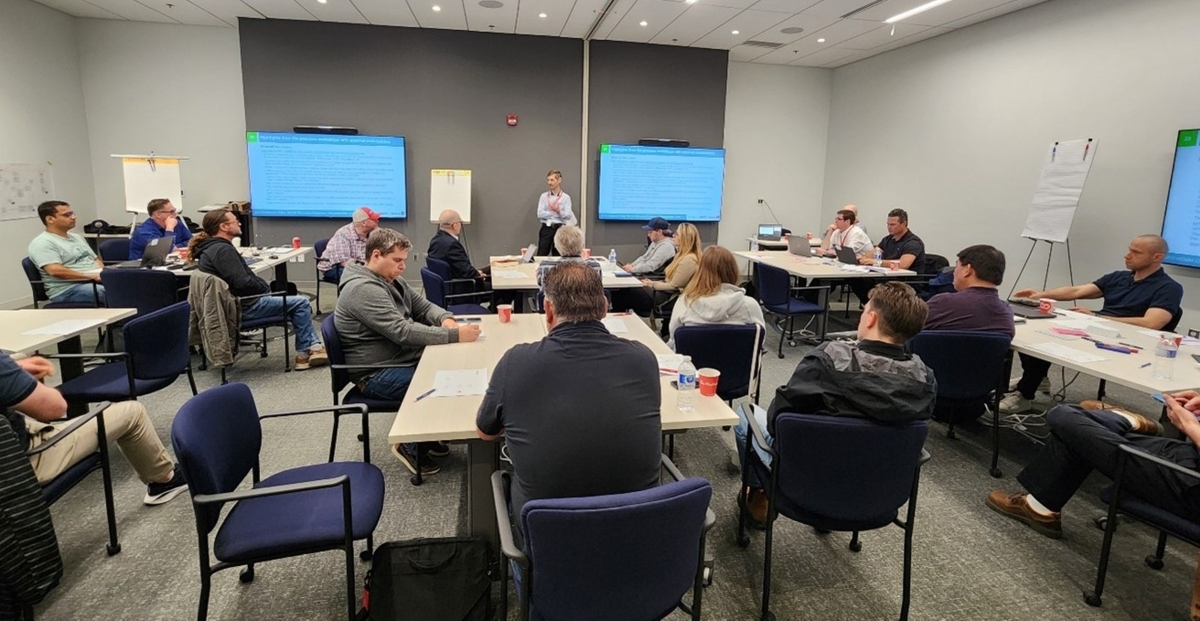
utility-coordination-meeting

How Effective Coordination Improves Infrastructure Project Outcomes

Weak coordination leads to predictable outcomes. Misalignment drives delays, conflicts are identified too late, and cost and safety risks increase.

Strong coordination changes that dynamic. Issues are identified earlier, decisions happen faster, and stakeholders remain aligned. The result is reduced overall project risk and more reliable delivery.

Better communication leads directly to better infrastructure outcomes.

The Role of the Utility Coordinator

Utility coordinators operate without formal authority but carry significant responsibility in managing utility coordination risk.

Their role is to bridge technical and organizational gaps, align competing priorities, and guide communication across disciplines. This is leadership through influence, and it is one of the most important drivers of risk reduction on complex infrastructure projects.

Practical Ways to Improve Utility Coordination

Most coordination challenges can be traced to one root cause: critical information was not communicated early enough.

Progress does not require a full overhaul. It starts with communicating earlier, clarifying key assumptions, strengthening relationships, and improving documentation habits. These small changes compound to reduce risk across every project phase.

Ready to find out more?

Download the Utility Coordination Soft Skills whitepaper. If you want to see how effective utility coordination can improve your next project, contact 4Sight.
Screenshot

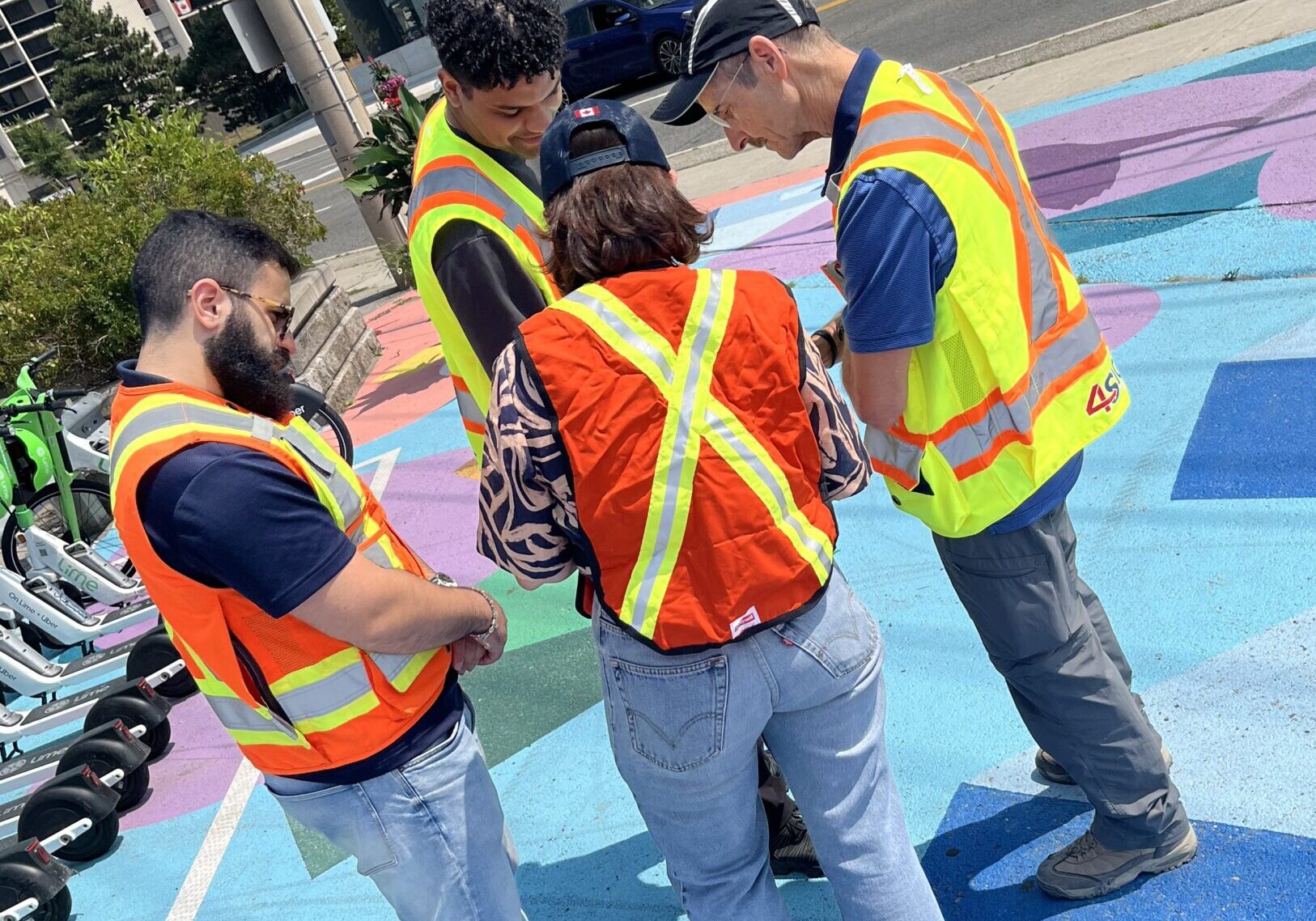
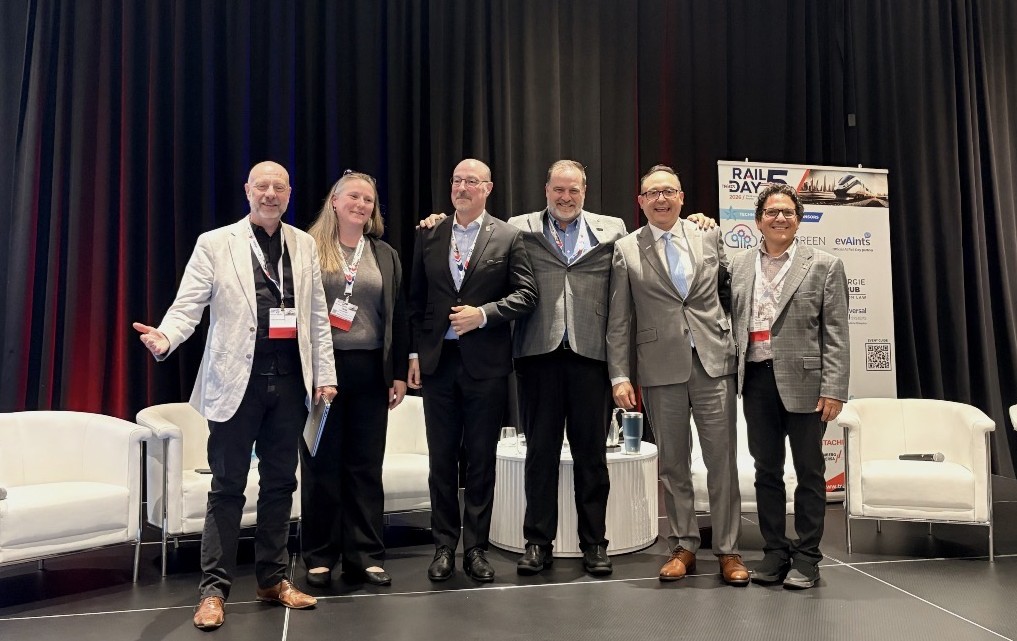
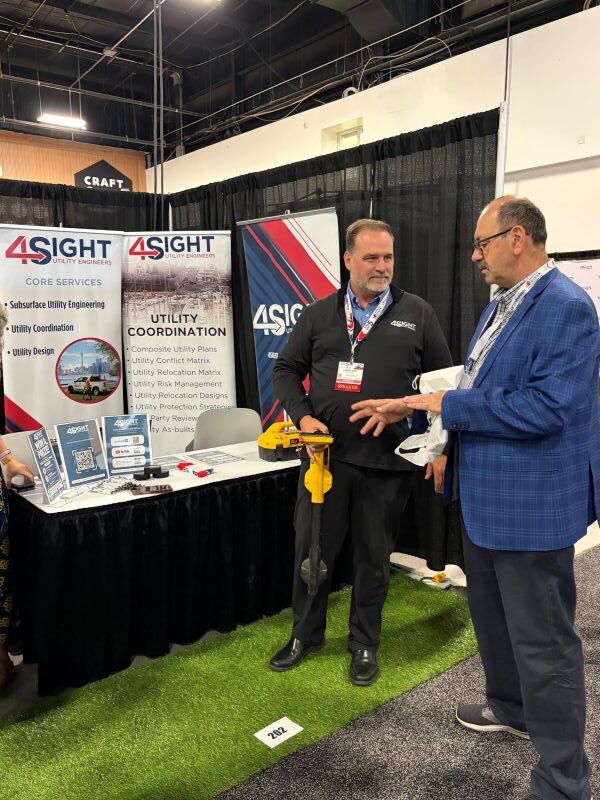
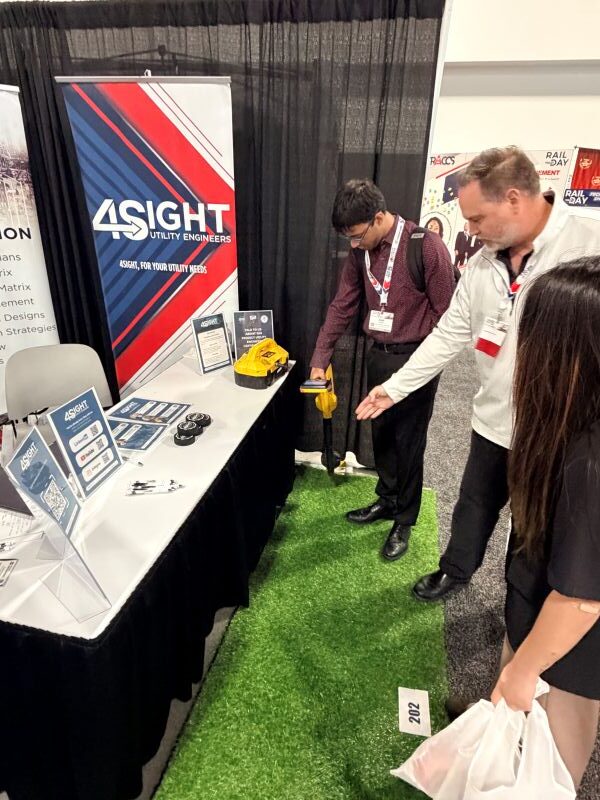
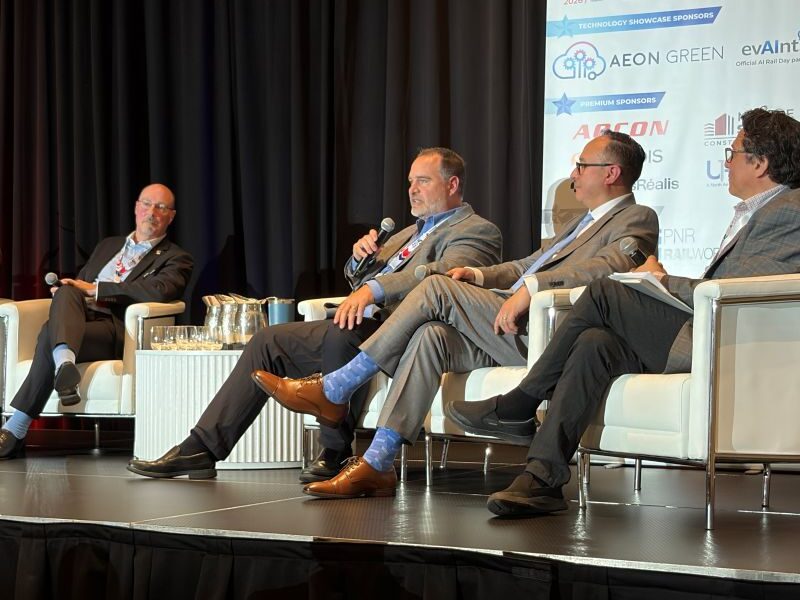
The 4Sight team had an amazing time at TRACCS Transit & Rail Association Rail Days. From tackling the challenges facing major transit and rail programs across Canada to showing a TMU civil engineering student how to locate cables, it was a great reminder of the power of sharing knowledge and experience. Thank you to the organizers and everyone who stopped by the booth for a chat.

women-in-engineering-2026 -website

Happy International Women in Engineering Day to the women making a difference every day. Today, we celebrate the women of 4Sight for their expertise, leadership, and collaboration, helping us to deliver outstanding results to our clients and partners, and advancing our industry. 4Sight are proud to support a more inclusive and connected engineering community and to keep pushing that progress ahead.

4Sight At TRACCS - LinkedIn

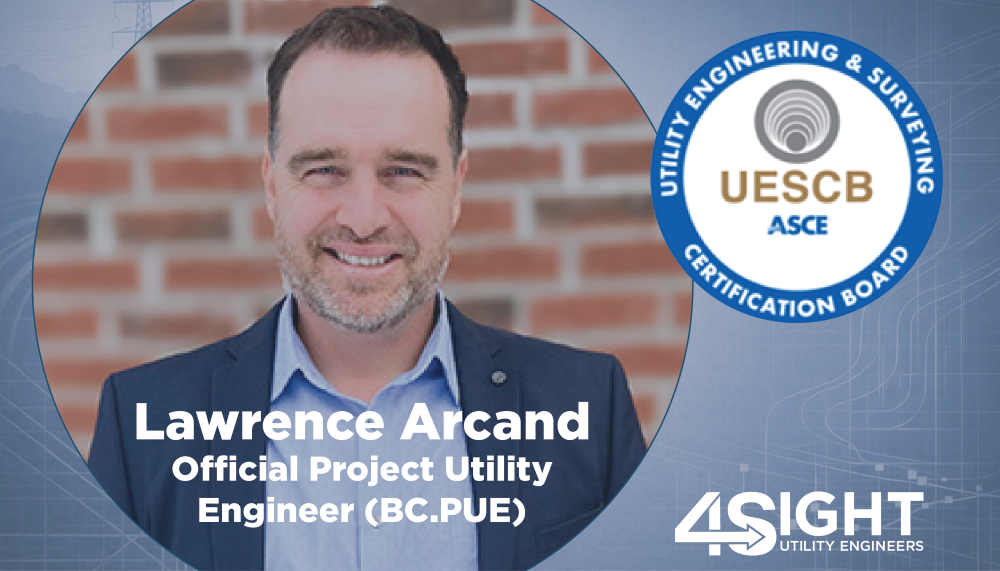
Come and find us at TRACCS! 4Sight President Lawrence Arcand and our team will be at Booth 202 connecting, sharing insights, and exploring the innovations driving the future of transit and rail infrastructure.

2026-bmo-toronto-football

It's almost time for Toronto to host the 2026 games ⚽ and a great moment to reflect on the hard work that goes into building the infrastructure behind events events like these. 4Sight are proud to have had a direct involvement, carrying out the Subsurface Utility Engineering (SUE) investigation at the BMO Field prior to its renovation. Better utility intelligence helps enable safer decisions, reduces uncertainty, and keeps complex projects on track. It's the kind of work that rarely gets seen, but always matters.

Golf Day_LinkedIn_May 26

We're looking forward to our annual 4Sight golf day today. It's always a great chance to connect across our teams, enjoy a bit of friendly competition, and take time to have some fun together.

Drayden Andrucko-Hedderson

We're excited to welcome Drayden to the 4Sight team as our Summer Co‑op Student. This role combines fieldwork, CAD, and exposure to real‑world utility projects, which is ideal for building hands-on experience in Subsurface Utility Engineering. Glad to have you with us Drayden, we hope you have a great summer!

Playing for more than the win. The 2026 Engineers Cup raised $4,000 for the Andrew Watson, P. Eng Scholarship

The 2026 Engineers Cup was more than just great fun, it was a chance to come together and make a real difference.
We're very proud to share that, together, we raised $4,000 for the Andrew Watson, P. Eng Scholarship—over $1,000 more than last year—supporting Civil Engineering students who demonstrate resilience and dedication. Andrew was a highly respected engineer and TMU graduate whose legacy continues to inspire. This scholarship ensures his impact lives on by helping future engineers pursue their goals, even in the face of adversity.
A big thanks to everyone who showed up, played hard, and supported this important cause. We’re already looking forward to next year’s tourney!